

Jan
09
feat. Nels Cline, Patricia Brennan, Takuya Kuroda, Lakecia Benjamin, Obed Calvaire, Fonville x Fribush and more

Fri January 9th, 2026
6:00PM
Main Space
Minimum Age: 18+
Doors Open: 5:30PM
Show Time: 6:00PM
Event Ticket: $85-$550
Day of Show: $95-$550
A rallying cry echoes across the 2026 NYC Winter Jazzfest season:
STILL WE RISE • STILL WE GATHER • STILL WE DANCE • STILL WE PLAY • STILL WE SING
The festival once again brings together a kaleidoscope of voices spanning jazz, experimental, soul, electronic, and global traditions.
6:00 PM – Nels Cline: Songs from LOVERS conducted by Michael Leonhart
7:15 PM – Patricia Brennan
8:30 PM – Takuya Kuroda
9:45 PM – Lakecia Benjamin
11:00 PM – Braxton Cook
12:15 AM – Obed Calvaire: 150 Million Gold Francs
1:30 AM – Fonville x Fribush ft Morgan Burrs w/ Toribio
This program is part of the NYC Winter Jazzfest Manhattan Marathon, presenting dozens of artists and groups on Friday, January 9 from 5:00 pm to 3:00 am, at eight different venues across lower Manhattan. Marathon tickets grant access to all venues. On Saturday, January 10, the Winter Jazzfest presents the Brooklyn Marathon at various venues throughout Williamsburg. 2-Day Marathon passes giving access to all Manhattan and Brooklyn events are available. For the complete festival lineup visit: https://nycwjf.com/lpr

Ticketing Policy
All ticket sales are final. No refunds or exchanges. Physical photo ID required for all shows with age restrictions – no exceptions.
When an event sells out, fans who missed out on tickets can join the Waitlist for a chance to purchase tickets from someone who can no longer attend. Joining the Waitlist does NOT guarantee entry to the event, please do NOT arrive at the venue unless you are contacted about tickets becoming available.
Joining the Waitlist:
• If you’re looking for a ticket to a sold out show, add your info the the corresponding Waitlist.
• If a ticket becomes available, you’ll be notified and your credit card will be charged.
Listing Your Ticket on the Waitlist:
• If you already have a ticket, you can list it on the waitlist through the “My Tickets” page.
• Once we find a buyer for your ticket, you will be notified.
Nels Cline
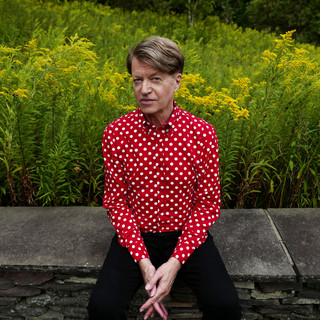
Up until the mid-2000s, guitarist Nels Cline was probably best-known for his work in the group Quartet Music and other projects in the jazz, rock, and avant-garde idioms, as well as for his general involvement in the West Coast’s avant and improv scenes. During the ’90s, Cline recorded a pair of duo outings with Thurston Moore and Devin Sarno before embarking on Interstellar Space Revisited: The Music of John Coltrane with drummer Gregg Bendian ; he joined the latter’s Interzone group while leading his own trio, the Nels Cline Singers. In 2004, Cline opened up a much larger audience for a jazz guitarist than is typical, joining the alt-country and experimental pop act Wilco . Whether playing the music of other jazzmen such as Andrew Hill (2006’s New Monastery: A View Into the Music of Andrew Hill), recording a score to accompany the massive touring retrospective of iconic Los Angeles painter Ed Ruscha (Dirty Baby), collaborating with guitarist Julian Lage , jamming and recording with Medeski, Martin & Wood , or rocking with White Out , Cline is a figure with global influence. In 2016, he issued Lovers, his Blue Note debut, featuring the guitarist leading his own group and a chamber orchestra in a collection of standards and originals. He followed with 2018’s Currents, Constellations and a trio of 2020 albums that included Share the Wealth.
Born in Los Angeles in 1956, Cline began playing guitar around the age of 12, when his twin brother Alex began learning the drums. By the time Cline reached his twenties, he was heavily involved in L.A.’s improvisational community and, in 1978, appeared on his first recording, Openhearted, by multi-instrumentalist Vinny Golia . He went on to appear on over 70 releases, lead several of his own groups — including the Nels Cline Trio and the sextet that followed, Destroy All Nels Cline — and tour internationally with a variety of bands. As a composer, Cline has scored films in addition to writing much of his own material. He has also produced albums for himself, G.E. Stinson , and Jeff Gauthier , among others.
Bassist Eric Von Essen and Cline met up in the late ’70s and began working together, recording an album of duets called Elegies that was released in 1980 on the Nine Winds label. Von Essen got involved in an orchestra with violinist Gauthier , and it wasn’t long before the three formed a group of their own. Alex Cline sat in on their first concert and eventually joined the three permanently, resulting in the group Quartet Music , which remained together throughout the ’80s. In addition to his work in Quartet Music during this decade, Cline worked with Liberation Music Orchestra West Coast, was a member of a rock band called Bloc, worked with Julius Hemphill as well as Charlie Haden , and released his first album as leader, Angelica, which included members of Quartet Music , saxophonist Tim Berne , and more.
The first half of the ’90s found his new Nels Cline Trio hosting a weekly improv series for four years and recording as many albums. During the ’90s, Cline also worked with Thurston Moore (of Sonic Youth ), Stephen Perkins ( Jane’s Addiction ), Mike Watt ( Minutemen ), and the Geraldine Fibbers . A duo recording by Cline and percussionist Gregg Bendian covering John Coltrane ‘s Interstellar Space was released by the Atavistic label in 1999. That same year, the California Music Awards named Cline Outstanding Jazz Artist. The next year, he released Inkling on Cryptogramophone , beginning a collaborative relationship with Andrea Parkins that would continue for the next several years. Destroy All Nels Cline was next, followed by the formation of the Nels Cline Singers, who released their first album, Instrumentals, in 2002.
In 2004, Cline was asked to join Wilco and has toured and appeared on all subsequent albums by them. He still had time for other projects, however: there have been several one-off collaborations during the ensuing years and two albums by the trio of Cline, Andrea Parkins , and Tom Rainey . In 2004, the Nels Cline Singers released Giant Pin, which Cline followed with an album of Andrew Hill compositions in 2006, the sublime New Monastery. Cryptogramophone subsequently issued two more releases by the Nels Cline Singers, Draw Breath in the summer of 2007 and the two-CD package Initiate in 2010. Later in the year, Cline released Dirty Baby, a double-disc collaborative project with poet and producer David Breskin. Breskin selected 66 period images by the artist Ed Ruscha and evenly split them into two groups, wherein he commissioned the guitarist to compose one long work and one short work to accompany the images, without further instruction. Cline recorded these with a large group of musicians including Jon Brion , Scott Amendola , brother Alex Cline , and Devin Hoff . There is also a lushly illustrated book version with larger reproductions of these works with 66 written pieces by Breskin. Add this project to all the work Cline has done as a sideman since the turn of the century, and you’ve got one extremely busy, prolific, and versatile guitarist. In April of 2014, he appeared as a guest on Joan Osborne ‘s Love and Hate album, and as a full collaborator with Medeski, Martin & Wood on Woodstock Sessions 2. In 2014, Macroscope, with the Nels Cline Singers, and Room, a duet offering with classical guitarist Julian Lage , appeared on Detroit’s Mack Avenue Records .
After recording Star Wars with Wilco and a tour, Cline signed to Blue Note . His debut for the label was the double-length Lovers. Realizing a long-held dream, the set was inspired by Bill Evans , Jim Hall , Gil Evans , and Henry Mancini . Cline created an ambitious, self-proclaimed “mood music” project with a 23-member ensemble conducted and arranged by Michael Leonhart . It was produced by David Breskin and recorded and mixed by Ron Saint Germain. Lovers contained jazz and Great American Songbook standards alongside originals and covers of songs by Annette Peacock , Gabor Szabo , Sonic Youth , Jimmy Giuffre , and Arto Lindsay . The single/video “Beautiful Love” was issued in early June of 2016, premiered live at the Newport Jazz Festival in July, and released in August.
Cline’s recording experience with Lage on Room proved indelible. The pair often speculated on what an album would sound like if they chose a rhythm section. To that end, Cline asked bassist Scott Colley and drummer Tom Rainey (who had played hundreds of shows together as a running rhythm section in the ’90s) to accompany them at a residency at New York venue The Stone in 2016. At that time, Colley and Lage were playing in Gary Burton ‘s group and the bassist eventually joined the guitarist’s trio. Cline had played with everybody before. The live gig went so well it laid the foundation for the recording sessions that resulted in Currents, Constellations, Cline’s second Blue Note album, with the intrepid quartet calling itself the Nels Cline 4. He wrote seven of the record’s eight compositions; the lone cover was Carla Bley ‘s “Temporarily,” a rarity closely associated with the Jimmy Giuffre Three. According to Cline, the point wasn’t to feature “sovereign” fewer guitar solos, but to facilitate an ensemble sound, whether marked by heated collective improvisation or a more delicate and precise approach on the contemplative pieces. The funky preview single, “Imperfect 10,” was released in March along with a promotional “in-studio” video. Currents, Constellations was released in mid-April a few days before the band — with bassist Jorge Roeder sitting in for a previously committed Colley — undertook a European tour.
In January of 2020, Cline, bassist William Parker , and keyboardist Thollem McDonas , issued Gowanus Sessions II for ESP-Disk . During the spring, Cline and pianist/organist/synthesist Jamie Saft aided drummer/composer Bobby Previte in the RareNoise trio outing Music from the Early 21st Century. In October, Blue Note Records issued the single “Beam/Spiral” preceding the release of Share the Wealth, Cline’s third label offering, this time by an expanded Nels Cline Singers. Curiously, the lineup he assembled — saxophonist Skerik , percussionist Cyro Baptista , keyboardist Brian Marsella, bassist Trevor Dunn , and drummer Amendola , had yet to play a gig together when they entered Brooklyn studio The Bunker. Cline and co-producer Eli Crews recorded the band over two days, playing long, spontaneous jams. Cline originally wanted to edit the sprawling proceedings heavily, in order to create a cut-and-paste, collaged, psychedelic record. Upon listening closely to the uninterrupted jams, however, he changed his mind and decided to release them unedited. The double-length Share the Wealth was released in November. ~ Sean Westergaard & Thom Jurek, Rovi
Takuya Kuroda

Kobe-born, Brooklyn-based trumpeter Takuya Kuroda is dedicated, and his eighth studio record, Everyday is proof of that. Since the release of his soulful seventh effort, 2022’s Midnight Crisp –– a record praised by PopMatters as a “future classic” –– Kuroda has not missed a beat. In his desire to achieve the “perfect blend of production and organic performance” the 45-year-old musician has continued to throw himself into his practice daily, nearly thirty years into his musical life. Everyday builds on and dives ever deeper into the hip hop and neo-soul elements of his previous work*.* It is a deliciously rhythmic enterprise and a triumph of genre-blending modern jazz. Kuroda’s playing is sure-footed and pure –– whether on the horn, synth, or Rhodes–– and he virtuosically dances among infectious rhythms of his own creation.
Kuroda’s twenty-one years in the United States have been fruitful. After studying composition at The New School, he threw himself into work, playing with DJ Premier’s Badder Band and Akoya Afrobeat and recording as a sideman and bandleader for records on the likes of Blue Note and Concord. But as Kuroda himself says, “the only way to make the music that I want to make is to work hard, every day.” And so we have Everyday, a title which reflects, as Kuroda puts it, “that simple message.”
There is a certain duality to the title that taps into something profound about this music. “Everyday” of course means both daily and commonplace. While Kuroda’s music is anything but average, there is something about the intrinsic and embedded nature of the day-to-day, the incidental rhythms of life, that is reflected and seductively expounded on here. Kuroda describes the process of recording Everyday like this: “Make tracks at home, bring them to the studio, add or replace sounds, invite musicians, repeat the process to polish the track –– as I hear it.” There is both a no-nonsense work ethic here and also a sort of embeddedness, an everydayness, that Kuroda achieves through this practice which perhaps cannot be accessed if one simply waits to get to the studio to begin work. Kuroda builds, tweaks, plays and polishes until what’s coming through the speakers matches what’s been playing in his head everyday. This is exactly what ensures Kuroda’s skillful synthesis of influences which Dean Van Nguyen noted while reviewing 2020’s Fly Moon Die Soon for Pitchfork*.* One is left with that sense that Kuroda has been tapping it all out everywhere he goes, drumming his fingers on the diner counter, shuffling his feet along the pathway in the park, manifesting the rhythms of his mind. “Groove,” Kuroda says, “is the foundation for all the tracks on Everyday.”
And atop that strong foundation, brought to life by the energy of David Frazier’s drumming, Kuroda’s shimmering lyricism dances all over Everyday. His trumpet playing pops and weaves and rings on the title track and his melodies are, as he puts it, “singable” –– profoundly so on
the album closer, “Curiosity,” on which Kuroda trades trumpet for flugelhorn. Before that, “Bad Bye” is a glittering and classic sounding neo soul effort, featuring a stunning performance from vocalist FiJa. It’s as though Kuroda plucked this track from a dream of Mama’s Gun –– but, unmistakably, it’s Kuroda’s dream and so the song is Kuroda’s, entirely. Likewise with “Iron Giraffe,” in which Kuroda makes space for tenor saxophonist Craig Hill to weave a contemporary reverie of Night Music.
Everyday is hyperaware of a panoply of old ideas and a pantheon of old gods but as Kuroda engages these tropes and personalities day in and day out, he turns it all around in a style that’s undeniably cool and personal. As Pitchfork put it, “Kuroda’s skill is not drawing influence from so many different forms, it’s radiating joy in doing so.” And as Kuroda puts it, “I’m still learning everyday and trying to express myself more clearly in the form of music that I love.” It’s this sterling dedication that makes Takuya Kuroda and Everyday anything but commonplace.
Braxton Cook
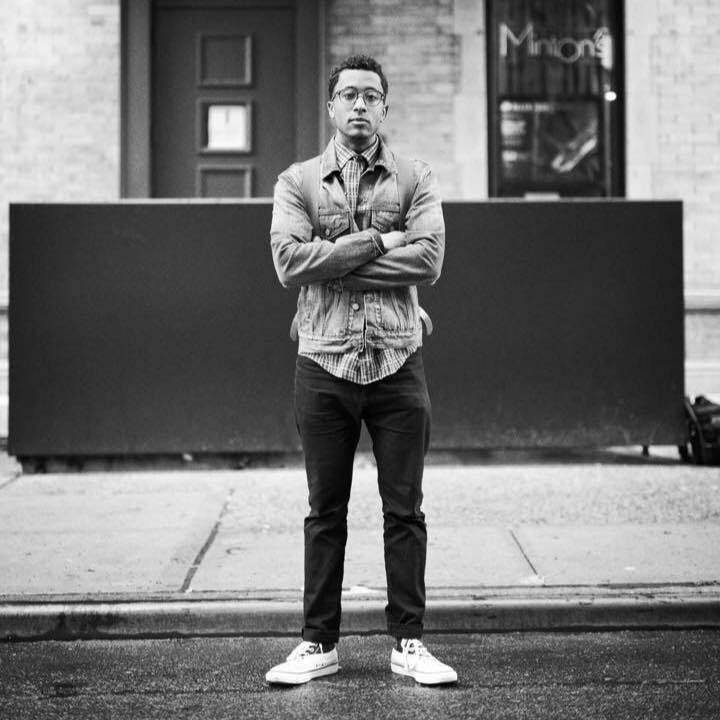
Braxton Cook official site | Braxton Cook on Facebook | Braxton Cook on Twitter | Braxton Cook on Bandcamp
When I was 5, my Mom rented a saxophone for my Dad’s birthday. I remember sitting down and listening to him play Somewhere Over The Rainbow. The rest of my brothers had left the room, but I stayed, transfixed by the sound. Eventually he came over and asked if I wanted to try it myself – it was too big and heavy for me to hold, so he held it up for me. From that first note, I was hooked and knew that I had to play the saxophone.
I grew up in the 90’s in the Maryland/DC area, my house was full of all kinds of music, I remember listening to so much good music in those early years, old Motown records, Parliament Funkadelic, Cameo, Bill Withers and old jazz records. The sound of the saxophone always stood out to me and I found myself wanting to recreate the sounds that I heard from the recordings. After numerous hours of practice and study I eventually got better and people began to take notice. Shortly thereafter, I began formal lessons with a private teacher and eventually starting performing locally in the Maryland/DC area. Since then my musical journey has taken me to some exotic and wonderful places, and I’ve had some amazing support from people I love and respect.
In 2011 I transferred from Georgetown University, where I’d been studying English, to The Juilliard School in NYC to study Jazz Saxophone. Juilliard is an amazing place, so much history, the walls lined with true legends, you can’t help but feel honored and slightly overwhelmed by the greats that had walked those halls years before. In my first year several events collided and led to the privileged position I am now in. A chance to meet with Grammy Award nominated Christian Scott at a Donald Harrison concert led to me being flown to LA 6 months later for a recording session and here I am nearly 4 years later, playing saxophone in his group.
In the years when I was touring around the world with Christian Scott, I managed to save up enough money to move out from my dorm rooms at Juilliard and got my own apartment in Harlem. Harlem is a very special place, full of history and culture. Harlem is a melting pot of old and new, you can walk down 125th Street past the African drum circles, the Apollo Theatre, and even a hip-hop cypher. The aroma of foreign countries fill the air, the vibe of the place is both exciting and inspiring. Creatively there is so much inspiration in Harlem, and I think it has probably been the biggest influence on my music now.
Although my time at Juilliard taught me so much, creatively and musically it was kind of rigid, the history and structure of the place felt constrictive. I feel as though the direction I’m heading in now is more honest to who I am and embraces all of my musical influences. Ultimately, I would be unfulfilled if I only played straight ahead jazz because I would be neglecting an entire other side of my development which is R&B and Soul music. I’m finally getting back to what it is I’ve always wanted to do, which is to sing and play the saxophone and that’s a very fun and exciting thing.
I feel lucky to have been given so many breaks and opportunities in my career so far, but this is just the start, the future is exciting and finally feel like I can breath and write music from the heart that means something to me, and hoping that it’ll mean something to someone else too.