

May
06
w/ Trinary System + Brandon Seabrook

Wed May 6th, 2026
7:30PM
Main Space
Minimum Age: All Ages
Doors Open: 6:30PM
Show Time: 7:30PM
Event Ticket: $22
Day of Show: $27

Ticketing Policy
All ticket sales are final. No refunds or exchanges. Physical photo ID required for all shows with age restrictions – no exceptions.
When an event sells out, fans who missed out on tickets can join the Waitlist for a chance to purchase tickets from someone who can no longer attend. Joining the Waitlist does NOT guarantee entry to the event, please do NOT arrive at the venue unless you are contacted about tickets becoming available.
Joining the Waitlist:
• If you’re looking for a ticket to a sold out show, add your info the the corresponding Waitlist.
• If a ticket becomes available, you’ll be notified and your credit card will be charged.
Listing Your Ticket on the Waitlist:
• If you already have a ticket, you can list it on the waitlist through the “My Tickets” page.
• Once we find a buyer for your ticket, you will be notified.
The Messthetics

Deface the Currency, the new second collaborative album from the Messthetics and James Brandon Lewis, grew out of a simple intuition. The group — with saxophonist Lewis joining the core Messthetics lineup of Brendan Canty on drums, Joe Lally on bass and Anthony Pirog on guitar — was on tour in the summer of 2025 when Canty knew it was time to go back into the studio.
This configuration of the band had debuted on record the year prior, releasing an acclaimed self-titled album via Impulse!, the legendary jazz label. But as the quartet logged serious time on the road, the drummer felt their chemistry evolving, so he called up engineer Don Godwin and booked a couple of days at Tonal Park in Takoma Park, Maryland, where The Messthetics and James Brandon Lewis was recorded.
“The driving impulse was to not let a moment in time go away when you have a band that’s really jelling with one another emotionally and musically,” Canty recalls.
The plan was never to track an entire album — rather just to capture a few songs that they’d been playing live. But once the sessions began, it became clear that the group was ready to make its next full-length statement.
Deface the Currency preserves the tightness and variety of its predecessor, but across the album’s seven tracks, it reveals new levels of confidence and risk. On pieces such as the title track — named after a quote from Greek philosopher Diogenes that speaks to challenging societal norms — and a new version of “Serpent Tongue,” which first appeared on the Messthetics’ self-titled 2018 debut, the quartet reaches ecstatic peaks that convey fun as much as ferocity. More than any earlier statement by the band, the record seamlessly melds the sounds that make up its collective DNA, from punk rock to free jazz and funk, balancing compositional precision with palpable improvisational fire.
“I like making nice, carefully orchestrated records,” Canty says. “But I also really like to bring abandon into the studio, because I think people hear that difference.”
The Messthetics formed in 2016 in Washington, D.C., drawn together by mutual admiration: Pirog had grown up listening to Fugazi, the era-defining post-hardcore band anchored by the rhythm section of Lally and Canty, while the bassist and drummer heard the genre-spanning guitar visionary play around town and took note of his unusually inclusive aesthetic. Pirog had played and bonded with Lewis before the Messthetics formed, and in 2019, he invited the saxophonist — whose massive, soulful sound has made him a star of the contemporary jazz scene — to sit in with the group live. The collaboration blossomed and eventually led to the quartet’s 2024 LP.
As strong as that effort was, it documented a union that was still in its infancy: The trio worked up most of the material apart from Lewis and then rehearsed with the saxophonist for just one day before entering the studio.
“We literally were not a band that did what bands do at that point that we made the first record,” Lally notes.
The quartet’s subsequent extensive touring brought about a very different result on Deface the Currency. “The more you know someone, the better the relationship is, the more enriched it becomes,” Lewis says. “It’s like a cast-iron skillet: The more you keep cooking in it, the better the food gets. So I think that’s what you hear on the record, and you hear an urgency of now.”
The band’s heightened communication comes through in Deface the Currency’s many surprising dynamic shifts. On “Universal Security,” Pirog and Lewis’s floating melody, played over a waltz-time pulse from Lally and Canty, segues into the saxophonist improvising against a wall of richly textured guitar noise. And “Gestations,” which layers a bebop-esque line atop a taut funk groove, holds its energy in reserve before revving up to an explosive climax that suggests doom metal meets Ask the Ages, guitarist Sonny Sharrock’s 1991 avant-jazz masterpiece, which the quartet has recently covered in concert.
“We just started recording things and getting them down in first or second takes,” Pirog recalls of the Tonal Park session. “I don’t think we were expecting to finish the record that quickly, but we were just so in the zone of playing together that it was pretty easy.”
Their collective instincts served them equally well on the album’s mellower moments, such as the Wayne Shorter–esque “30 Years of Knowing,” as on the tracks that reach full roar, including “Rules of the Game,” with its hard-funk stomp that earned it the Parliament-nodding provisional title of “Mr. Wiggles,” or the grinding, anthemic “Clutch,” which exemplifies what Lewis calls a “wounded warrior, ‘we will prevail’ type vibe.”
The album as a whole — a statement of vigor, sensitivity and spontaneity — shows that Canty’s initial instincts were correct: Through playing night after night, the quartet had reached new territory.
“The band has become its own thing, and it’s become its own different thing,” the drummer says, “a collective, an actual group.”
James Brandon Lewis
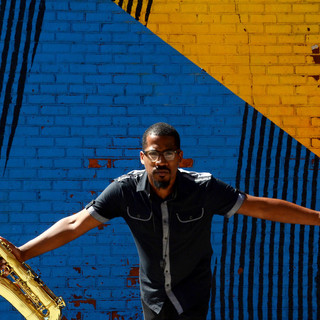
James Brandon Lewis is a New York-based jazz tenor saxophonist, composer, and bandleader. His instrumental voice marries the emotional power of gospel and the grit and groove of blues and R&B to the modal and vanguard influences of Albert Ayler and John Coltrane , and Sonny Rollins ‘ expressive melodic and tonal discipline. Moments, his 2010 debut, was followed by two outings for Sony Masterworks ‘ revived OKeh imprint: Divine Travels in 2014 and the widely celebrated Days of Freeman the following year. After working American stages and clubs, he toured European and Asian festivals. Radiant Imprints, a duo outing with drummer Chad Taylor , appeared in 2018 and was followed by the quintet offering An UnRuly Manifesto a year later. In 2021, after he was selected as the “Rising Star Tenor Saxophonist” in the Downbeat International Critics Poll, Lewis issued The Jesup Wagon, his debut for Tao Forms .
Lewis was born in Buffalo, New York in 1983. Raised in the church, he was exposed to the aforementioned genres early, and studied music with Carol McLaughlin . He attended the Buffalo Academy for the Visual and Performing Arts. Upon graduation, he continued his studies with Charlie Young at Howard University. While at Howard, Lewis was able to study and perform with jazz artists including Geri Allen , Benny Golson , Wallace Roney , and Bill Pierce. He was a member of the Howard University Jazz Ensemble that toured Japan under the direction of Fred Irby, and performed at the Kennedy Center Honors backing John Legend , k.d. lang , and Vanessa Williams .
After graduating from Howard in 2006, Lewis moved to Colorado, where he became active in the gospel music community, performing with Albertina Walker and other luminaries. He also performed on the WORD television network and won an award for Best Instrumentalist at Dorinda Clark-Cole ‘s singers and musicians conference in 2007.
After establishing himself as a gospel musician, Lewis sought to expand his musical horizons. He attended CalArts, where he studied with Charlie Haden , Wadada Leo Smith , Vinny Golia , and Alphonso Johnson . He received a Master of Fine Arts degree in 2010. Moments, his debut album, was independently issued the same year.
Lewis attended the Banf Jazz Residency, where he worked with Dave Douglas , Angelica Sanchez , Joshua Redman , Hank Roberts , and Tony Malaby . It was there that he encountered the dynamic universe of free jazz. He was invited to participate in the Atlantic Center for the Arts residency by pianist Matthew Shipp and made more than an impression. Urged on by the pianist and others in the New York jazz community, Lewis relocated to New York City in 2012. He began woodshedding with a host of veteran musicians including Marilyn Crispell , Charles Gayle , Karl Berger , and Eri Yamamoto , to name a few. He was especially fond of playing with bassist William Parker and drummer Gerald Cleaver .
With the latter two musicians, Lewis released Divine Travels on Okeh in February 2014 and achieved instant acclaim for his ability to embrace and update the sounds of his influences with a unique, utterly contemporary voice. The following year, he issued the conceptual suite Days of Freeman for the label, leading a trio composed of drummer Rudy Royston and bassist Jamaaladeen Tacuma . The set won international acclaim for the saxophonist’s writing as well as his playing, providing Lewis the ability to play the European festival circuit as a bandleader for the first time.
In 2018, Lewis and drummer/percussionist Chad Taylor issued the improvised Radiant Imprints for Belgium’s Off label. He also appeared on guitarist Marc Ribot ‘s widely celebrated Songs of Resistance 1942-2018, the William Hooker -led Pillars … At the Portal, and on Allen Lowe ‘s Avant Garde of Our Own: Disconnected Works, 1980-2018.
The following year, Lewis issued An UnRuly Manifesto for Relative Pitch Records , leading a quintet that included guitarist Anthony Pirog , trumpeter Jaimie Branch , drummer Warren G. Crudup III, and bassist Luke Stewart. The set drew rave reviews for the finesse in Lewis’ playing and his canny interactions with Pirog . The same year, Lewis and the U.K. rhythm section of bassist John Edwards and drummer Mark Sanders issued the improvised digital outing 4.2.19 on Otoroku . He appeared on saxophonist Michael Eaton ‘s Dialogical, and on the digital Ropeadope -released Tenor Triage, with saxophonists Eaton and Sean Sonderegger appearing alongside him with the rhythm section of bassist Brad Jones and drummer Calvin Weston .
Though the world was shut down for much of 2020 due to the global COVID-19 pandemic, Lewis’ and Taylor ‘s concert performance at Switzerland’s annual jazz festival the previous fall was released as Live in Willisau by Intakt , as was the studio quartet outing Molecular with Jones, Taylor , and pianist Aruán Ortiz . To debut his new compositional strategy, Lewis dubbed the album “Molecular Systematic Music.” That year Lewis was voted Rising Star Tenor Saxophonist in Downbeat’s International Jazz Critics Poll.
Though he couldn’t tour in 2020, he was able to write and record. He conceived of a suite of compositions inspired by the life and work of George Washington Carver. In the fall of 2020 he assembled the intergenerational Red Lily Quintet — Taylor on drums, William Parker on bass, Kirk Knuffke on cornet, and Chris Hoffman on cello — to record it while socially distanced at the Park West Studio in Brooklyn with engineer Jim Clouse; it was titled The Jesup Wagon after the Carver-invented vehicle used in the Tuskegee Institute’s Movable School program. Author Robin D.G. Kelley stated in his liner notes for the album that on The Jesup Wagon “… Lewis has composed a body of work that captures the essence of Carver’s life, work, and vision. A serious student of Carver, Lewis peels back the facade of the old, kindly man conjuring up new uses for peanuts, to reveal the artist, botanist, ecologist, aesthete, musician, teacher, and seer who anticipated our current planetary crisis.” The Jesup Wagon was released by Whit Dickey ‘s Tao Forms label in May 2021. ~ Thom Jurek, Rovi
Trinary System

Trinary System is Roger Miller’s current rock band. He plays guitar, sings and composes, accompanied by Larry Dersch (Binary System, A.K.A.C.O.D., etc.) on drums and P. Andrew Willis (the Web, Crappy Nightmareville, etc.) on bass, vocals and electronics.
Roger Clark Miller was born in 1952 in Ann Arbor, Michigan. He began studying piano at age 6. Inspired in 6th grade by seeing the Beatles on Ed Sullivan, he picked up guitar and bass guitar in middle school, and played french horn in the orchestra to avoid study hall. He was profoundly affected by the psychedelic movement which was full-blown by 1967 – here was real mind-altering music. Miller found his voice as a song-writer, composer and improviser in 11th grade (1969/ Sproton Layer).
Disillusioned with the conservative state of rock music in the 1970’s, Miller studied composition at CalArts and Thomas Jefferson College (see Cuneiform Records’ release of 1975 by The Fourth World Quartet). There he accompanied dance classes on piano. Adapting his musical skills for dance paved the way for his later soundtrack work (four films at Sundance, multiple silent film scores premiering with Alloy Orchestra at the Telluride Film Festival).
In 1978, Miller moved to Boston, where he co-formed the highly influential post-punk rock band Mission of Burma on guitar and voice in 1979. He continued playing keyboards and other instruments during and after Mission of Burma, starting with Birdsongs of the Mesozoic.
Under his band leadership, Miller has recorded over 60 albums, all of which push various envelopes and have generally received high praise.
When Mission of Burma inexplicably reformed in 2002, things took an amazing turn. But by 2012, Miller was looking for a way to free his guitar playing from the confines of a post-punk environment and conceived of Trinary System. He had played with Larry Dersch in Binary System, and knew that Dersch’s drumming would keep him on his toes. Miller met multi-instrumentalist P. Andrew Willis while Willis was engineering an Alloy Orchestra (now Anvil Orchestra) score. He found his comments intriguing, and, never having seen him play a note, asked him to join Trinary System on bass and synthesizer. It was the right decision. Trinary System began loosely based on previous non-Burma Miller compositions, but covering Miles Davis’ “Black Satin” and Can’s “You Doo Right” were turning points. Once the value of each player became clear, Miller began composing for the group in earnest.
And this brings us to Cuneiform Records’ release of The Hard Machine where Trinary System is in full maturity mode, full-throttle, do or die. What else is there?
Larry Dersch played in bands in his hometown of St. Louis, MO, before moving to Boston in 1986. He played on Miller’s 1988 album Win! Instantly!, and then in Miller’s Binary System (1995-2002). He is currently the second percussionist in Miller’s silent film accompanying ensemble The Anvil Orchestra. He has collaborated with Mark Sandman of Morphine, and toured Europe in the acclaimed A.K.A.C.O.D with Morphine sax player Dana Colley. He remains active in the Boston scene and in high demand, and he has won “Best Drummer” awards from the influential local zine The Noise three times.
P. Andrew Willis is “an ex-pat from the Louisville sub-underground” (Byron Coley, 2019), playing in the Web, Azuza Inkh and other improv/noise bands there. He moved to Boston in 1998 to study film scoring. There, he saw Binary System – and knew he’d be playing with them one day. When Miller began putting together Trinary System in 2012, Willis was the only person auditioned. The Hard Machine is a result of those decisions. Willis remains active as a soundtrack composer and improviser in Boston.
” “…Trinary System presents their new album…between art rock, experimental pop, and instrumental storytelling, feeling both complex and immediate. The band combines organic timbres with electronic structures, layering with transparency, energy with melancholy. …Between pulsating grooves, poetic textures, and shimmering guitar lines, musical spaces emerge that range from introspective fragility to eruptive power. The album plays with contrasts – between control and chaos, catchiness and abstraction. … “The Hard Machine” is a multifaceted statement from a band that defies easy categorization yet remains instantly recognizable. – Broken Silence
Brandon Seabrook

Brandon Seabrook is a NYC-based guitarist and banjoist. His music fuses a wide range of traditions: punk rock, jazz, pop, and metal. As a guitarist his work feeds off tactile sensations; rapid tremolo picking, contorted clusters, and extreme physicality. Rolling Stone Magazine noted, “The fiercely dexterous musician has launched a number of bands combining serious chops with manic intensity and a left- field compositional vision.” He has released twelve albums of original music and has been a featured solo artist at Big Ears, Angel City Jazz Festival, Moers Festival, and Jazz Em Agosto. Along the way he has collaborated and recorded with Mike Watt, Joey Arias, Cécile Mclorin Salvant, Anthony Braxton, Bill Frisell, David Byrne, and Ghost Train Orchestra among many others.