


LPR Presents
Apr
07
with Saving Grace and Suzi Dian with special guest Rosie Flores

Tue April 7th, 2026
7:30PM
The Cathedral of St. John The Divine
Minimum Age: All Ages
Doors Open: 6:30PM
Show Time: 7:30PM
Event Ticket: $99-$475
Day of Show: $99-$475

Ticketing Policy
Enter through the Cathedral’s main doors at 112th St and Amsterdam Ave (1047 Amsterdam Ave). A stair-free entrance is available via the ramp on the north side of the building. As one of the world’s largest Gothic cathedrals and a landmark of New York City’s architectural history, the space offers an especially unique setting for this performance.
All guests must pass through Cathedral Security, including a bag check and metal detectors. Large bags are discouraged. Only water is permitted inside the Cathedral; all other food and beverages are prohibited.
The Cathedral offers general admission seating across five sections (A–E), with Section A being closest to the stage. All sections are first come, first seated, and entry to the seating areas begins when doors open. Please arrive early for the best selection of seats. A seatmap of the Cathedral can be found below:

All ticket sales are final. No refunds or exchanges. Physical photo ID required for all shows with age restrictions – no exceptions.
When an event sells out, fans who missed out on tickets can join the Waitlist for a chance to purchase tickets from someone who can no longer attend. Joining the Waitlist does NOT guarantee entry to the event, please do NOT arrive at the venue unless you are contacted about tickets becoming available.
Joining the Waitlist:
• If you’re looking for a ticket to a sold out show, add your info the the corresponding Waitlist.
• If a ticket becomes available, you’ll be notified and your credit card will be charged.
Listing Your Ticket on the Waitlist:
• If you already have a ticket, you can list it on the waitlist through the “My Tickets” page.
• Once we find a buyer for your ticket, you will be notified.
Robert Plant
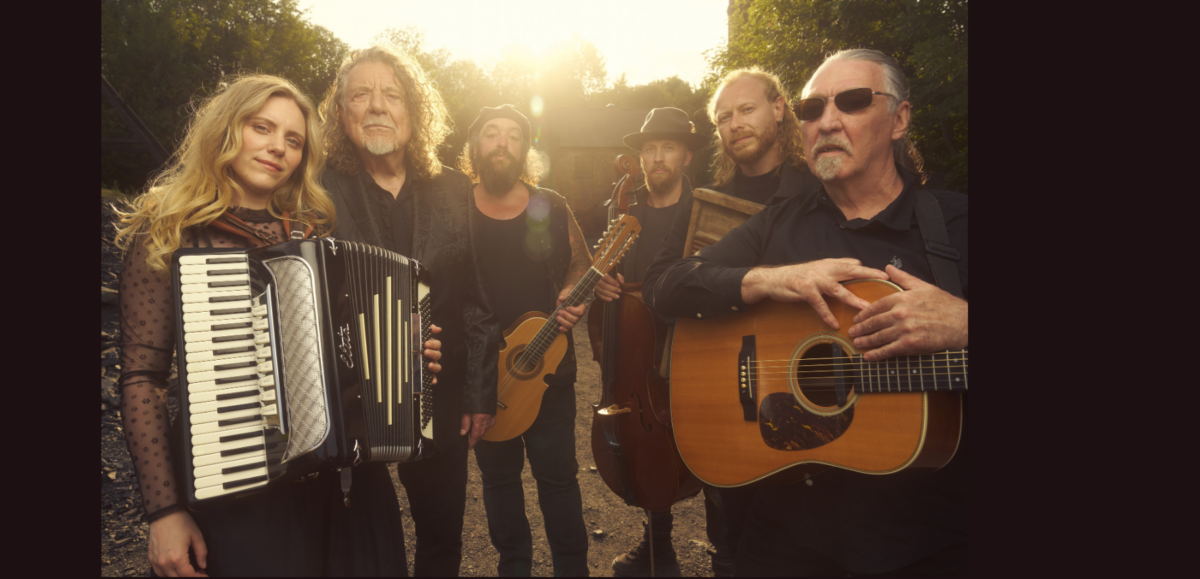
Though Robert Plant is, literally and figuratively, the biggest name on the cover art for Saving Grace, he would be the first to say that the album is very much a group effort, with its title also serving as this new band’s moniker. The group members were drawn together by a shared love of roots music both vintage and modern—of blues, folk, gospel, country and those tantalizing sounds that lay in between. Like Plant, they’re keen to explore how these genres are evolving as well as to discover where these repertoires originated—and how collectively they could reinvigorate the music they loved.
This sensibility is reflected in the songs that made it to the final track listing, from familiar traditional numbers like the plaintive “I Never Will Marry;” the African-American spiritual “Gospel Plough;” and “Chevrolet,” which Donovan had adapted into his “Hey Gyp (Dig the Slowness)” back in 1965 to beautifully rendered outliers like Providence, RI trio The Low Anthem’s haunting “The Ticket Taker;” revered indie-rock duo Low’s epic “Everybody’s Song;” and Moby Grape’s pastoral “It’s A Beautiful Day Today.” Plant, who produced the album with the band, rarely claims center stage, most often sharing vocals with co-billed singer Suzi Dian and sometimes ceding the mic to her entirely. On Blind Willie Johnson’s “The Soul of a Man,” guitarist-banjo player Matt Worley takes the lead, with Dian and Plant serving as backup.
Despite Plant’s iconic status as an artist since his days with Led Zeppelin, Saving Grace managed to start out in 2019, casually and somewhat discreetly, as a local project. The players had been working collaboratively for barely a year, even serving as an unheralded opening act on a handful of dates with Fairport Convention when the pandemic intervened and any formal plans to tour or release music were temporarily shelved. That turned out to be less setback than serendipity. It allowed Saving Grace time to gestate, to find a collective voice.
Once Covid protocols permitted, they began to record informally in a barn set-up and sometimes outdoors, hanging microphones in the trees; when the doors to clubs and concert halls opened once again, they booked themselves without fanfare into local venues. There were no press releases, not even a website. Only the evocative image of the lone bison that is now used on the album cover and as a backdrop for their shows.
Plant was clearly no stranger to this music: He’d already received great acclaim for his brilliant, unexpected and Grammy Award-winning foray into roots music with singer and fiddler Alison Krauss—“the queen of Champaign,” as he calls her—and, before that, alongside Patty Griffin and Buddy Miller, in his 2010 version of Band of Joy. But those were his American cohorts. Until Saving Grace, Plant had never found such like-minded collaborators when he came home to the Welsh borderlands. As Plant says, “It’s an impressive collection of people now. I can’t tell you how lucky I feel about this.”
It all began down the pub, in the sort of place where one might have discovered a common thread, a shared passion, with another stranger-turned-new friend before the internet and algorithms took over. As Plant explains, “I came back one time and there was this guy, Matty Worley, a big guy who plays cuatro, two different strung banjos, and acoustic guitar. Thanks to his father, he had been following the Ian Campbell Folk Group, Peggy Seeger, and the people who worked alongside her.
“I met him in a bar, I didn’t know him, but he was very forward and what he wanted to know all about was my relationship with the Incredible String Band. He was eager to know how much I had to do with Dave Swarbrick and Sandy Denny and suddenly we were talking about a world I really loved, that I had been attached to since I first started out, playing washboard in a delta blues band in 1963. He had a vast arsenal of points of reference. I started to get to know Matt and his energy and his knowledge and then his dexterity as a player. It seemed to me I’d found some sort of conversation. I started sharing some songs out of the thousands of songs I’ve yet to put out, and we said, ‘Let’s see what we can do with this.’”
Plant suggested bringing along guitarist Tony Kelsey, “a remarkable guitarist who played around in a lot of different musical set ups. At one time, he was a member of The Move, in one of its many incarnations. We started playing together, shuffling this stuff around and seeing where it would go. And it was really good. But the thing is, I said, ‘I don’t want to be on the sharp end.’ I always talk about singers holding up the sharp end of a performance. I knew I needed another voice on a lot of these songs. Where was the female voice? Where was the sweetness on top of my register? I knew about Suzi; she had her own band, and she is a great singer. I suggested she come along and have a listen to some of the songs I liked. She has spent quite a bit of time teaching, running classes and instructing teachers on how to bring kids forward in music. She’s as sensitive and equally as delicate. She had no premonitions at bringing these songs into the world.”
Krauss had schooled Plant on how to sing harmonies, and the lessons stuck: “She’s taught me so much. It was a beautiful coming together with two radically different voices and the harmonic swell of it. I was given a crash course in listening to other singing; it has been a major moment in my life as a singer. It’s extraordinary what that did for me, and what Alison has done and what she will remain and still do somewhere down the line.”
After trying out a conventional drummer, Plant turned to Dian’s husband, Oli Jefferson: “He had a more polyrhythmic approach; we discussed the whole deal of where I really want to take my music. There’s nothing particularly obscure about what we present on this record. It’s just a different way of doing it.”
The sound of Saving Grace at times incorporates elements of the hypnotic, droning grooves that distinguished Plant’s larger, electric combo, the Sensational Space Shifters, who backed the singer on his prior Nonesuch albums, lullaby…and the Ceaseless Roar and Carry Fire. There are hints of Malian desert blues and psychedelic folk. (With the Space Shifters, Plant notes, “We were playing around with stuff that was an amalgam of things. I like the mélange.”) The sound can seem alluringly mysterious at times, melancholic and foreboding, as on “The Ticket Taker” or “As I Roved Out,” a traditional song performed in an arrangement by fellow Nonesuch artist Sam Amidon, who reassembles folk classics into stark mediations on love and fate. The group takes a tune by North Carolinian singer-songwriter Sarah Siskind, whose work Krauss has also covered, and sneakily transforms it into a folk-rock rave-up. They bring similar drama to Low’s “Everybody’s Song.” “Higher Rock,” by Portland singer-songwriter Martha Scanlan, a one-time member of string band the Reeltime Players, has a simpler, yearning, up-tempo feel, showcasing Dian’s voice.
Cellist Barney Morse-Brown, aka Duotone, rounds off the ensemble, on record and on tour. The group first ventured from their local haunts to Ireland, where, as Plant recounts, “Of course what do you do in Ireland is you laugh, you sing, then you end up in folk clubs, at arts festivals on the west coast off the great wild Atlantic way. That whole folk community, the fiddle and the bodhran. It was so appropriate to the way I felt and have felt since I was a kid, about that area, that quadrant of my musical love.”
Though Plant headlined stadiums in his storied past, now, he admits, “What I am really impressed by is this living, new world of whatever this music is. Last year we played the Cambridge folk festival. With this mélange of music song and voice, anywhere and everywhere is the way to see the road ahead.
“I’m not jaded by this,” Plant says, finally. “It’s been a revelation—the sweetness of this thing. These are really sweet people. They’re playing all the stuff they could never get out before. They’ve become unique stylists and have created a new place for the old dog.”
—Michael Hill
Rosie Flores
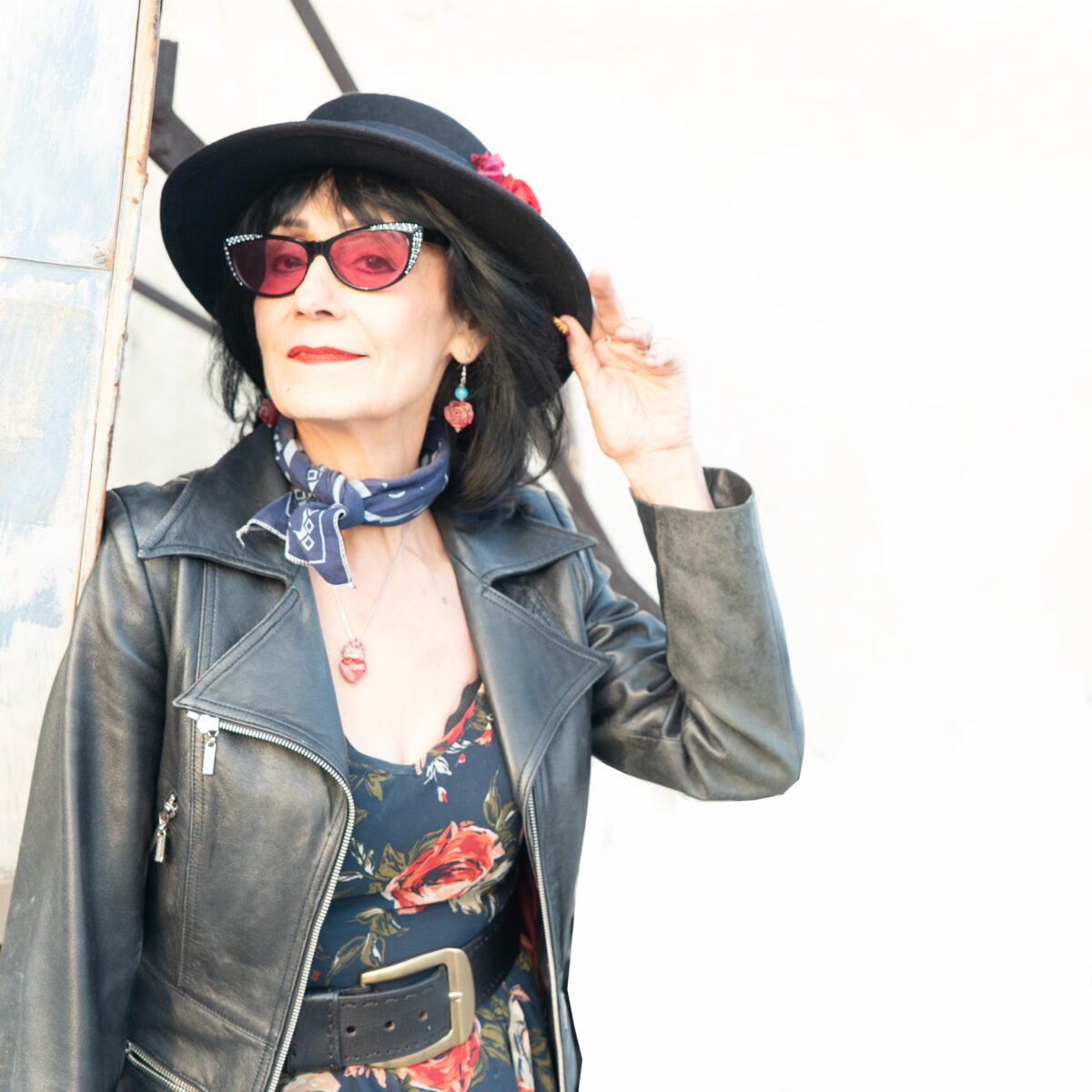
Rosie Flores, triple-threat Texas musician, has never allowed the challenge of navigating the male-centric worlds of rock and country music slow her down. In fact, she often drew upon those challenges as source material in sharply observed songs she not only wrote and sang with authority and passion, but also brought to life musically as a widely respected lead guitarist in a string of notable bands.
Rosie is one of the 2024 NEA National Heritage Fellows! In September 2024 she accepted her gold medal award at the Library Of Congress, appearing at the Kennedy Center as well as the White House.
A daughter of San Antonio whose musical journey also has included quality time in Austin, Los Angeles, and Nashville, Flores has adroitly absorbed, helped preserve, and extended the musical legacies of influential Texas musicians as varied as country music’s King of Western Swing Bob Wills & His Texas Playboys, blues guitar master T-Bone Walker, and Tex Mex innovator Doug Sahm.
In the 1970s, she became one of the most celebrated performers on the “cowpunk” circuit (a hybrid of punk rock and country), alongside such other rising stars as Dwight Yoakam, Lucinda Williams, Rank & File, and Los Lobos (2021 NEA National Heritage Fellows). The release of her 1987 debut solo album Rosie Flores proved her to be a singer and songwriter of the first rank, and helped lay the foundation for what coalesced into the alt country movement.
Flores became the first Latina to crack Billboard’s country music chart. For her enthusiastic participation in and ongoing promotion of Austin’s deep and wide music scene, including the annual South by Southwest Conference, the city has proclaimed Rosie Flores Day in 2006.
Flores has remained a spark plug live performer for more than five decades, a goosebump-inducing electric guitarist and songwriter as well as champion of the trailblazers who preceded her. Notably, she lured pioneering rockabilly heroines Wanda Jackson (2005 NEA National Heritage Fellow) and Janis Martin (“the female Elvis”) back into recording studios and onto concert stages for lauded late-career rejuvenations. Flores won a 2007 Peabody Award for her narration of the NPR rockabilly documentary, Whole Lotta Shakin’.
Tapping her Mexican heritage, Flores formed Las Super Tejanas with singer-songwriter Tish Hinojosa, accordionist Eva Ybarra (2017 NEA National Heritage Fellow), Shelly Lara, and Las Madrugadoras mariachi trio.
Her esteem has only grown over the years, to the point where she and her music are included in Middle Tennessee State University’s History of Country Music courses. She was afforded a prominent spotlight position in the Country Music Hall of Fame and Museum’s exhibition “Western Edge: The Roots & Reverberations of Los Angeles Country-Rock” in Nashville.
By Randy Lewis, covered pop music for the Los Angeles Times from 1981-2020, with special emphasis on country and Americana music