


Jan
16
w/ Elsa Kennedy

Fri January 16th, 2026
7:30PM
Main Space
Minimum Age: 16+
Doors Open: 6:30PM
Show Time: 7:30PM
Event Ticket: $20-$25
Day of Show: $25-$30

Ticketing Policy
This show includes both Standing and Seated tickets. By purchasing a Seated ticket you agree to also purchase a minimum of two food and/or beverage items per person. Table seating is first come, first seated. Please arrive early for the best choice of available seats. Seating begins when doors open. Tables are communal so you may be seated with other patrons.
All ticket sales are final. No refunds or exchanges. Physical photo ID required for all shows with age restrictions – no exceptions.
When an event sells out, fans who missed out on tickets can join the Waitlist for a chance to purchase tickets from someone who can no longer attend. Joining the Waitlist does NOT guarantee entry to the event, please do NOT arrive at the venue unless you are contacted about tickets becoming available.
Joining the Waitlist:
• If you’re looking for a ticket to a sold out show, add your info the the corresponding Waitlist.
• If a ticket becomes available, you’ll be notified and your credit card will be charged.
Listing Your Ticket on the Waitlist:
• If you already have a ticket, you can list it on the waitlist through the “My Tickets” page.
• Once we find a buyer for your ticket, you will be notified.
Jesca Hoop
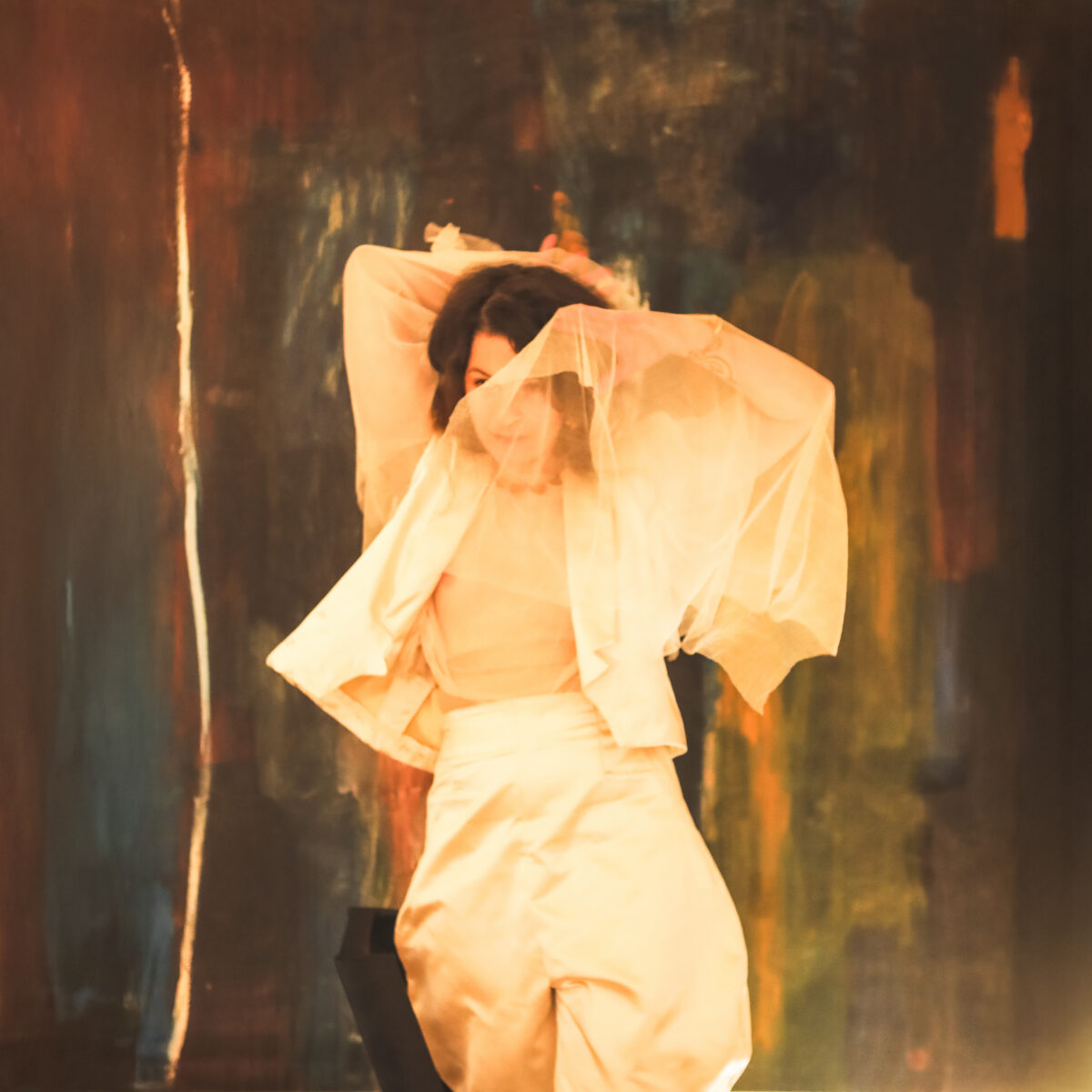
Jesca Hoop’s Long Wave Home spills with hope for a broken world. The seventh solo album from the California-born, Manchester-based songwriter took shape amidst a period of both personal and geopolitical upheaval: a web of schisms that seemed to reflect one another as they unfolded. It is the first album Hoop produced by herself, and it marks both a fresh start and a deepening of her extensive, multifaceted discography. Across the record’s rich and sumptuous tracks, Hoop deeply considers what it is that people owe to each other: in individual relationships, in community, and as witnesses to the broader world. These days run thick with terror. Long Wave Home sinks into it and surfaces anew with a nimble, inquisitive spirit.
At the end of 2024, Hoop began mapping out what would become Long Wave Home with a focus on her own independence as an artist and working musician. “I shed a lot of superfluous roles and structures wherever I was making too many compromises,” she says. “With that blank slate, I started to write.”
The songs, at first, came slowly. Hoop’s life moved at an even keel, and she struggled to find points of tension that might serve as the basis for new music. “If life doesn’t present you with a change, how do you grow?” she asks. Then, in 2025, change came for her. Some of Hoop’s most trusted relationships began to shift considerably. “My writing opened up. I had more tension than I knew what to do with, and plenty to explore about human relationships,” Hoop says. “I was able to engage by just recording what I was seeing around me.”
As the songs on Long Wave Home grew from this generative state, Hoop made the choice to produce the album herself. “I really had to commit and do what my hero would do,” she says, referring to Joni Mitchell and her storied artistic independence. In the past, Hoop had worked with a roster of seasoned, brilliant producers: John Parish (PJ Harvey, Tracy Chapman); Tony Berg (Taylor Swift, boygenius); and Blake Mills, (Fiona Apple, Alabama Shakes). Hoop learned from all of these partnerships. As she embarked on her seventh album, she was ready to apply that knowledge from the cockpit.
Hoop recorded Long Wave Home in studios around the United Kingdom. She asked her collaborator Jesse D. Vernon to arrange accompaniments for her songs, then set out in a camper van to meet session musicians and begin tracking. Her travels took her to The Shed in London, Empire Sound on the Isle of Wight, and J&J Studios in Bristol. Throughout the process, she worked closely with engineers Tim Thomas (Bright Eyes, British Sea Power) and Leo Abrahams (Belle & Sebastian, Frightened Rabbit) to foster the sound she envisioned for the album.
Under her careful hand, a populous, dynamic sound emerged. These songs about relationships hold relationality at their bones, from the rolling tuned percussion on “Now the Ash” to the call and response among brass, piano, guitar, and voice on “Adam.” “Listen to me, I’m your witness / And I believe in who you are,” Hoop sings on “Love is Salvation” as horns swell around her, tall enough to serve as sanctuary walls.
Hoop stares into darkness with equal warmth and precision. With “Designer Citizen,” she takes a sardonic edge to questions of nationality and belonging as she sings about observing American political instability from her home across the ocean. On “Signal to Noise,” Hoop reflects on an overwhelming media landscape that seeks to prevent political momentum from accreting among like-minded people: “If revolution can be sparked by a feeling / Turn up the system, point the finger, send them reeling,” she sings, her voice cradled by gentle backing vocals. And the driving, mournful “Playground” bears witness to the children whose playground has been reduced to rubble, then poses the question: Where does the trauma go?
“‘Playground’ was the quickest song I ever wrote. It usually takes me about a month to write a song, and I wrote this song in two days after watching Netenyahu give a press conference,” says Hoop. “I had such clarity on what I was seeing, and an inarguable statement that I could deliver in a song.”
The political landscape and the interpersonal landscape flow into one another, and to be a conscious inhabitant of both requires us to question ourselves. What do we owe to one another, and how do we deliver it? Where are our efforts most sorely needed, and how do we arrive there? Hoop’s songs remind us that evolution necessitates scrutiny: a searing gaze fixed on both the outer world and the inner self.
“I don’t draw the line between a love song and a political song,” she notes. “To me, it’s all about being here. All of these songs are love songs, and in one way or the next, they’re all protest songs, too.”
The album settles with a delicate and powerful title track whose atmosphere hangs heavy with the resonance of its commingling instruments. With “Long Wave Home,” Hoop wraps warm arms around the empty skeleton of isolation and blankets you. There is strength in solidarity, in the bare recognition that we all yearn for connection. “You’re not alone,” she sings. “Long waves are carrying you all the way home.” Somewhere there is a shore. Somewhere there is a receiver. Somewhere, and it isn’t as far away as it seems, the ocean waters break on solid ground, the static is tuned to a song, and the heart burns bright again, like pulsing lights atop distant radio towers.
Elsa Kennedy
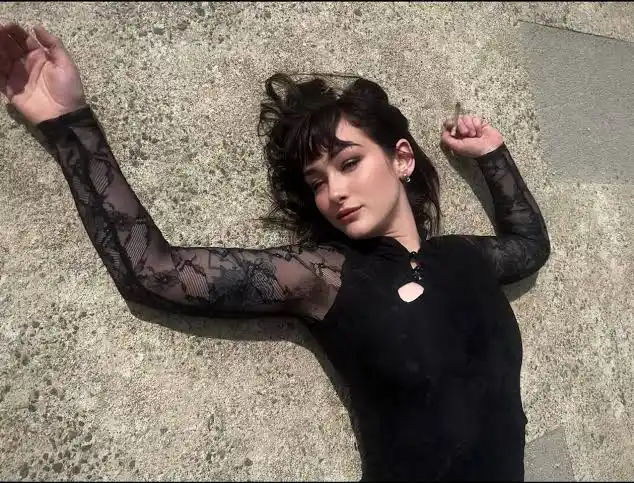
“‘A Weapon Is an Unhappy Tool,” a mood-juicing curiosity featuring jagged guitar emissions and the spoken-word vocals and evocative lyrical contributions of Elsa Kennedy, a Northern Kentucky native who sounds like Laurie Anderson after three shots of absinthe.’” – Cincinnati Magazine
Elsa Kennedy is a singer-songwriter, actress, and multimedia artist originally from a small town in Kentucky. A self-taught prodigy with a natural talent for singing and performance, she began performing at the age of ten.
As a prolific, renaissance artist, Elsa has developed a unique voice that blends her roots in “Weird America” with contemporary sounds and visions. An electric force of nature, she is forging a bold, boundary-defying wave of art and music.
Kennedy currently resides in Boston, Massachusetts.