

May
12

Sat May 12th, 2018
7:30PM
Main Space
Minimum Age: 18+
Doors Open: 6:30PM
Show Time: 7:30PM
Event Ticket: $20
Day of Show: $25
Margaret Glaspy

The Golden Heart Protector marks the first bit of music Glaspy has shared since last year’s EP The Sun Doesn’t Think (ATO), which followed her critically acclaimed 2023 album Echo The Diamond which drew attention from the likes of The New York Times, NPR, The New Yorker*,* and Rolling Stone, among many others. That LP emerged from a deliberate stripping-away of artifice to reveal life for all its harsh truths and ineffable beauty. Like the precious gem of its title, the result is an object of startling luminosity, one capable of cutting through the most elaborately constructed façades. The albums’ singles “Act Natural,” “Memories,” and “Get Back” saw support from The New York Times*,* NPR*,* Pitchfork*,* Stereogum*,* Spin, and others. “Act Natural” reached the top 20 at AAA Radio, marking Glaspy’s highest chart position of her career. The album was labeled a “notable release of the week” by both NPR and American Songwriter and Pitchfork included it in their “8 New Albums You Should Listen To” list around release and The New York Times’ Jon Pareles included “Memories” in his in Best Songs of 2023 list noting “Over a waltz of simple guitar chords, Margaret Glaspy blurts out unvarnished grief in a torn voice, bereft yet struggling to go on.”
Originally from the Northern California town of Red Bluff, Glaspy began writing songs at age 15 and quickly developed a style marked by raw sensitivity and razor-sharp insight. She began her solo career with the self-released Homeschool EP in July 2012. After signing to ATO Records in 2015, she released a 7-inch in early 2016 featuring “You and I” and “Somebody to Anybody”—songs that would later appear on her debut full-length Emotions and Math, a bold and bracing album that introduced her as a major new voice in indie rock.
PAST PRAISE FOR MARGARET GLASPY
“Singer-songwriter Margaret Glaspy returns to spiky, guitar-forward songs on her third LP, Echo the Diamond.” Pitchfork
“Expanding upon the the sound and themes of her previous effort, Devotion, Echo the Diamond finds Glaspy trusting her instincts and imbuing the batch of songs with a newfound rawness and grit…(her) songwriting has never felt so immediate or urgent. Consequence
“Margaret Glaspy’s passionate croak is haunted by the past on the folky ‘Memories,’ …the dark humor, at least, makes the anguish go down smoothly.” New York Times
“(‘Act Natural’)l is a good rocking number from Margaret Glaspy. The snappy guitar lick … immediately got my attention.” NPR
“(‘Act Natural’ is) one of Glaspy’s all-time best.. a roaring, wondrous stroke of blues-injected rock ‘n’ roll” Paste
“This moodier, more prickly attack suits Glaspy’s voice, concepts, and vision” American Songwriter
“Glaspy’s third is well-crafted and unfussy, foregrounding her sturdy guitar and clear sighted lyrics that range between grungy disaffection…and brittle yearning” MOJO Magazine
“Grungy guitar work + gutsy poeticism = great pop… 10 songs that glint like shards of glass yet brim with love, grief, courage, existential doubt and all the other stuff that makes us human.” UNCUT Magazine
Julian Lage
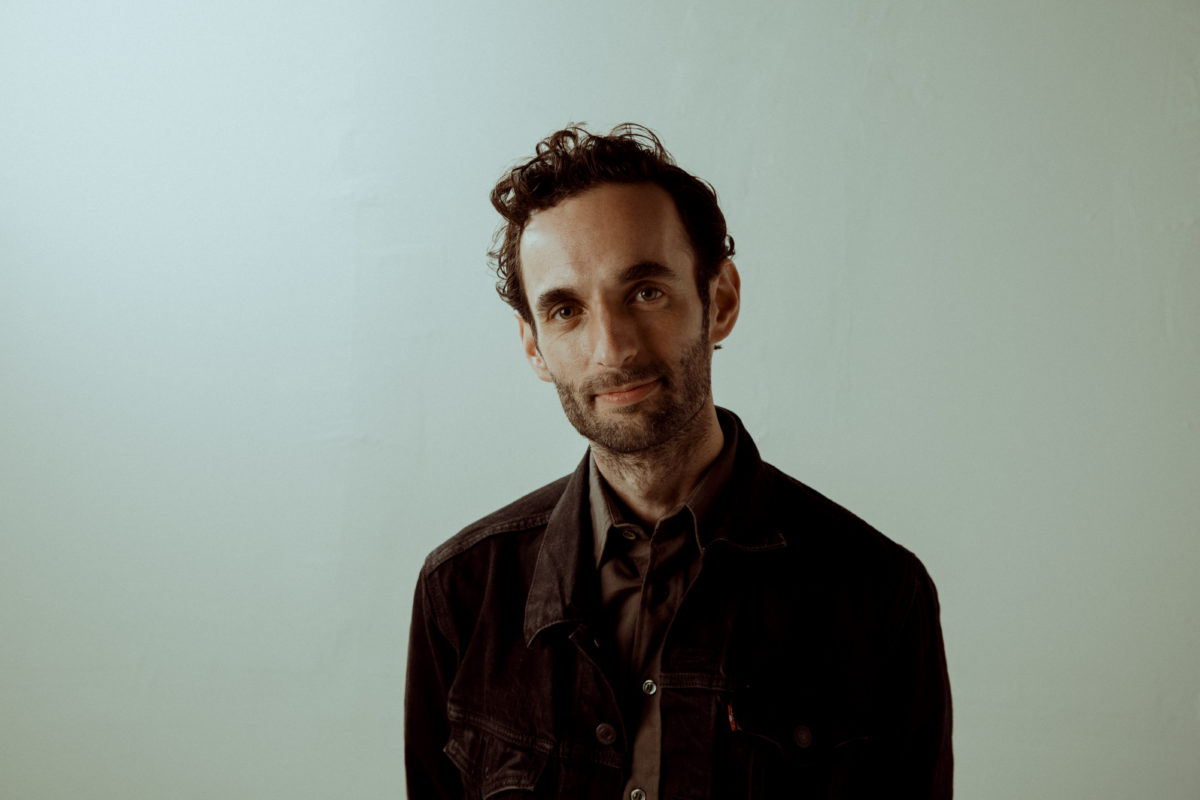
Julian Lage official site | Julian Fage on Facebook
Hailed as one of the most prodigious guitarists of his generation and “highest category of improvising musicians” (New Yorker), Julian Lage has spent more than a decade searching through the myriad strains of American musical history via impeccable technique, free association and a spirit of infinite possibility. The California-born New York-based musician boasts a prolific resume on his own accord in addition to collaborating with Gary Burton and John Zorn, as well as duo projects with Nels Cline, Chris Eldridge and Fred Hersch, among others.
As Lage set out to record his debut for Blue Note Records, the virtuoso guitarist reflected on the label’s storied history and the way his own music connected with it. The result is Squint, a striking new album that weds incisive, expressive songwriting with the profound interplay Lage has honed over the past few years with his deft trio featuring bassist Jorge Roeder and drummer Dave King.
Liza Anne
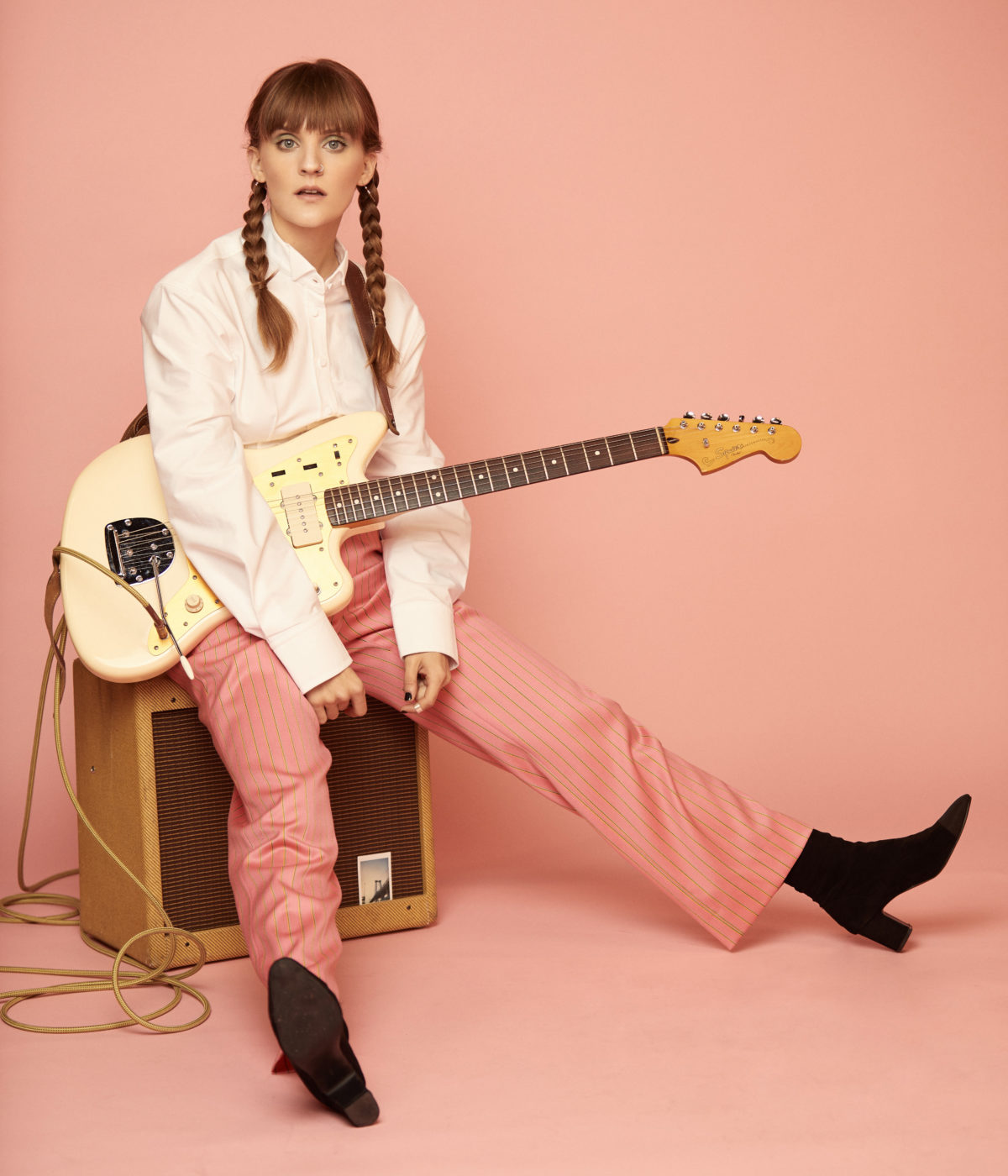
Liza Anne official site | Liza Anne on Facebook | Liza Anne on Twitter | Liza Anne on Instagram | Liza Anne on Bandcamp
“Growing up, people would always say I was too happy to be depressed, or too social to have anxiety,” says Liza Anne Odachowski, the critically acclaimed songwriter better known these days by her stage name Liza Anne. “In their eyes, because I was one thing, I couldn’t also be something else. I think we all exist in duality, though. I can be everything and nothing all at once.”
Duality is at the core of Liza Anne’s arresting new album, ‘Fine But Dying,’ her debut release for indie powerhouse label Arts & Crafts. Synthesizing the elegant sincerity of Angel Olsen with the wry lyricism of Courtney Barnett and the unapologetic candor of Feist, the music is both tough and vulnerable, bold and withdrawn, a helping hand and a middle finger. Firing on all cylinders with distorted alt-rock guitars and explosive drums one minute, hushed and delicate the next, it’s an eclectic collection that reflects the messy complications of growing up in the modern age, as the 23-year-old grapples with the fallout of falling in love, reckons with the patriarchy, and stares down the panic disorder she refuses to let define her. ‘Fine But Dying’ is the sound of an artist taking total control of her life and her art, a proud misfit crafting an aggressively infectious kiss-off to an industry (and a society) that’s tried to box her in from day one.
“Being a young woman playing music in Nashville, everybody had their opinions of who I should be and what I should do next,” says Liza Anne, whose music is as decidedly un-Nashville as it gets. “They wanted me to be happier and softer and easier because people are conditioned to only experience women in entertainment as a force of goodness and kindness and light. But just because I’m a woman doesn’t mean I have to be soft and happy and nurturing all the time. It’s pretty inhumane to expect a human being to represent only one side of themselves. We embody too many contradictions.”
‘Fine But Dying’ follows Liza Anne’s self-released 2015 breakout album, ‘Two,’ which garnered more than 20 million streams worldwide. NPR praised the record’s “deeply introspective” songwriting and “searing reflections,” while Nylon called it “a stunningly somber album” and dubbed Liza an artist with the “keen ability to turn even the smallest of feelings into a sweeping song.” The record earned her dates with Joseph, Margaret Glaspy, The Oh Hellos, and Bears Den, among others, as well as festival slots from ACL to Daytrotter Downs.
Though Liza Anne commands a stage like she was born to do it, a career in music was far from her mind as she grew up in the quaint, sheltered community of Saint Simons Island, Georgia. She discovered songwriting one summer at sleepaway camp, when a guitar class helped her realize that the notebooks she’d been filling with poetry and prose could be set to melodies. Raised in a deeply religious household, Liza’s first taste of public performance came on Sundays when she served as a local worship leader, and though she’s since moved on from the church, the experience proved to be formative for her.
“I learned at a very young age how to manipulate an entire room full of people to feel what I’m feeling,” she says with a laugh.
When it came time to cut ‘Fine But Dying,’ Liza Anne brought both her band and her producer, Zach Dyke, to France’s legendary La Frette studio, a 19th century mansion on the banks of the Seine. Dyke and Liza’s recording chemistry had been undeniable since they first met during college in Nashville, and though Liza dropped out of school to tour full time, the pair’s creative relationship continued to grow deeper and break new ground.
“Zach is my best friend and my magic charm,” reflects Liza Anne. “Working with him just feels like working with your other arm or another part of your brain.”
In a six-day whirlwind, they recorded eleven new songs that embodied the raw energy and tense emotion that Liza Anne had long carried in her head but never yet captured on tape.
“This is my ‘woman at her wildest self’ album,” she says. “It’s a place for me to express all of the things about womanhood and the human condition that I was experiencing without fear of feeling like I’m ‘too much’ or ‘not enough.’ People used to talk about my music in such sweet terms, but they weren’t sweet things that I was going through. With this record, I’m not sugarcoating anything any more.”
On album opener “Paranoia,” Liza Anne weaves together lilting pop sensibilities with moments of frenetic release as she confronts insecurity and doubt. The result is an addictive, Cranberries-meets-St. Vincent gem, and it proves to be a perfect entry point to an album unafraid to bare the multitudes it contains. Liza’s crystalline voice is alternately beguiling and jarring as she sets her distress to music on “Panic Attack,” sends up the hollow phoniness of southern hospitality on “Small Talks,” and sneers and snarls her way through the third-wave feminist anthem of “Kid Gloves.” On the gentle but bruising “I’m Tired, You’re Lonely” she channels the eerie beauty of Jeff Buckley, while “Closest To Me” is a reverb-soaked look in the mirror, and “Control” faces off against some of the darker voices in her head.
“There are moments in the song ‘Control’ that question what it feels like to be in love,” says Liza Anne. “The whole album is really a catalog of my first few years of falling in love with someone but doubting I had the capacity to actually do it.”
‘Fine But Dying’ proves that Liza Anne is a woman with the capacity to do far more than she’d ever given herself credit for. By casting off the restrictions of who and what she “should” be, by writing with unrepentant emotion and without concern for the constructs and confines of “femininity,” she was able to discover her truest self and create an album of incredible power and vision, one that fully reflects the rich duality of its author.
“This album gave me space to find my voice,” says Liza Anne. “In the end, I always want to make art that’s provocative and that challenges the stereotypes of what women are supposed to be or how they are usually experienced. Songwriting isn’t just fun for me, it’s necessity. It’s my way of escaping my body and inhabiting it at the same time.”
Photo Credit: Brett Warren