


Nov
10

Mon November 10th, 2014
8:00PM
Minimum Age: 18+
Doors Open: 7:00PM
Show Time: 8:00PM
Event Ticket: $40
Day of Show: $45
*ON-LINE SALES HAVE ENDED, TICKETS WILL BE AVAILABLE AT THE DOOR*
WFUV, Le Poisson Rouge & Anti Records proudly present Antithesis-An evening to celebrate forward thinking music with full sets by Daniel Lanois, Tinariwen, The Antlers, & Lonnie Holley.
**This is a general admission event at the Brooklyn Masonic Temple: 317 Clermont Ave #4, Brooklyn, NY 11205**
**ABSOLUTELY NO WILL-CALL NAME TRANSFERS/EXCHANGES WILL BE HONORED FOR THIS PERFORMANCE**
4
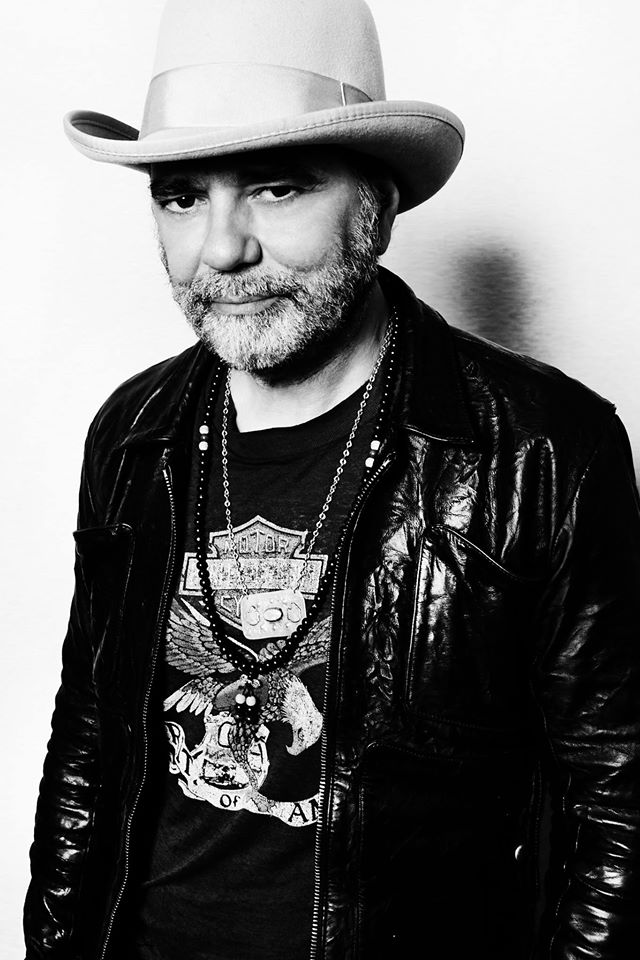
Daniel Lanois

The seven-time GRAMMY winner released his critically acclaimed solo debut, Acadie, via Opal/Warner Bros in 1989. The new deal spans a prolific thirty-five year period wherein Lanois released fourteen albums under his own name, including For The Beauty of Wynona (1993), Shine(2003), Rockets (2004*)*, Belladonna (2005) and Flesh And Machine(2014). The joint arrangement encompasses catalog alongside new and unreleased works to be released through 2026 and beyond.
Daniel Lanois’ new single “Grace” is available now on all streaming platforms. In this evocative reinterpretation of the classic folk hymn, “Amazing Grace,” Lanois’ signature production sets Aaron Neville’s timeless voice against Brian Blade’s improvised drumming, creating a poignant meditation on struggle, grace, and redemption — one that feels sonically and emotively expressive of the times we are living through.
One of the world’s most influential music makers, Lanois emerged onto the global scene in the 1980s, collaborating with Brian Eno on a series of experimental and groundbreaking ambient albums, culminating in 1983’s Apollo: Atmospheres and Soundtracks. His work in the early 80s with Eno and musicians such as Harold Budd and Jon Hassell ushered in new vistas of sonic possibility, leveraging the studio-as-instrument and employing pioneering production techniques to create immersive worlds of sound. From here, Lanois applied his questing creative spirit into a remarkable series of collaborations, producing timeless albums and commercial high-points with U2 (The Unforgettable Fire, Joshua Tree, Achtung Baby, All That You Can’t Leave Behind), Peter Gabriel (So, Us), Bob Dylan (Oh Mercy, Time Out of Mind), Robbie Robertson (Robbie Robertson), Neville Brothers (Yellow Moon), Emmylou Harris (Wrecking Ball), Willie Nelson (Teatro) and Neil Young (Le Noise) to name a few. The impact of Lanois’ production work has been vast, echoing for decades through the sound of contemporary popular music. Rolling Stone cited Lanois as “the most important producer to emerge in the 80s,” and his signature sound and style have influenced a countless number of artists.
In addition to solo and production work, throughout his career Lanois has been active scoring film, TV and gaming projects. Together with Brian Eno and Roger Eno, he provided the music score for David Lynch’s Dune (1984), produced music for the Oscar-winning film Sling Blade(1996), produced an instrumental score for the Pixies documentary loudQUIETloud (2006), and soundtracked the Rockstar Games smash success, Red Dead Redemption II (2018).
Never idle, Lanois remains ceaselessly creative in-studio, crafting new works and collaborating with artists on yet to be released projects. He spent much of the last year touring throughout North America with his live trio, joined longtime friends U2 on-stage for an appearance during their triumphant U2:UV residency at the Sphere in Las Vegas, was part of the all-star musical ensemble celebrating Robbie Robertson at the Life Is a Carnival tribute at the Forum in LA, and reunited with friends and collaborators Emmylou Harris and Brian Blade at the GRAMMY Hall of Fame induction ceremony for Emmylou’s classic 1995 album, Wrecking Ball.
The Antlers
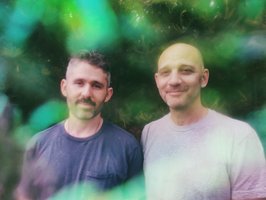
The follow-up to 2021’s rustic, folk-tinged Green to Gold, Blight asks many questions without offering easy answers. Over the course of nine new songs, the Antlers’ founder and primary songwriter Silberman reckons with our passively destructive tendencies – absentminded pollution, unwitting wastefulness, and the inadvertent devastation of the natural world. But despite its heavy themes, Blight is far from a punishing listen. With its adventurous arrangements and persistent momentum, it plays more like an iridescent odyssey.
The album was recorded over the course of a few years, with the lion’s share tracked and produced in Silberman’s home studio in upstate New York, a compact outbuilding perched at the edge of a neighbor’s sprawling hayfield.
“So much of the record was conceived while walking these massive fields,” he says. “I felt like I was wandering around an abandoned planet.”
And in a sense, Blight does feel like science fiction, sounding as if it were delivered from the near future. The album is a work of meticulous world-building, teeming with ear candy and surprising stylistic shifts. While many songs begin with sparse elements— a fingerpicked guitar, hypnotic organ stabs, or a nimble piano melody — they rarely remain tethered to their foundations. They often reimagine themselves partway through, shifting mid-track from gentle ballad to throbbing electronica, only to land somewhere entirely different by the end.
Silberman has been confronting weighty matters ever since The Antlers’ 2009 breakthrough Hospice, an unrelentingly heavy concept album about a child cancer patient and her caregiver that addressed psychological abuse and post-traumatic stress with explicit detail and unflinching vulnerability, resonating equally with those grieving loved ones and rocky relationships. The album’s ambitious sonics— an unlikely amalgam of intimate folk confessionals, haunted soundscapes, and sky-scraping post-rock— belied its modest origins: Hospice was mostly recorded alone in Silberman’s Brooklyn bedroom, with an economy of equipment and hardly any expectant audience. The surprise popularity of Hospice placed the Antlers on a rapid ascent, touring globally, playing major festivals, and supporting such luminaries as The National and Explosions in the Sky.
The music that followed grew The Antlers’ sizable following while resisting the impulse to rehash their initial success. The electronic pop of 2011’s Burst Apart, the aquatic psychedelia of 2012’s Undersea EP, and the brass-laden soul of 2014’s Familiars all embraced the band’s ingenuity while simultaneously subverting expectations, expanding the band’s emotional palette beyond the morose rage and desperation that characterized Hospice to reveal a playful expansiveness. The Antlers further pushed the boundaries as a live entity, trading the lush orchestration of their ambitious recordings for wall-of-sound maximalism and thunderous dynamics.
Sadly, Silberman was forced to scale back after an unexpected hearing incident left him temporarily deaf in one ear and hypersensitive to sound. Putting The Antlers on pause, he made 2017’s Impermanence, a meditative and minimal solo album, pairing his then-fragile voice with gentle guitar and an abundance of silence. After regaining his hearing and recovering from vocal cord surgery, Silberman and longtime drummer Michael Lerner revived The Antlers for 2021’s Green to Gold, a collection of songs notably devoid of the darkness that characterized the band’s previous work.
Following Green to Gold, Silberman honed his collaborative chops, including co-producing Wild Pink’s critically-acclaimed breakout ILYSM. Shortly thereafter, he released the debut album from Cowboy Sadness, his instrumental band with David Moore (Bing & Ruth) and Nicholas Principe (Port St. Willow).
During these intervening years between Antlers albums, Silberman and Lerner kept busy as well, releasing a series of free-standing singles unified by The Antlers’ gift for acid-dipped timbres, shape-shifting production, and impressionistic imagery.
“These singles were metaphysical songs about connection with nature, which in turn put me in touch with all the ways that nature is under threat,” he says. “The smell of wildfire smoke on a sunny afternoon, the sound of chainsaws on a hike through the woods — these contradictions became impossible to ignore.”
Whereas The Antlers have previously dealt in extended metaphors, Blight now takes a more direct approach. In “Calamity,” for instance, Silberman asks point-blank: “Who will look after what we leave behind?” The final and perhaps fundamental question posed by Blight appears in the penultimate track, the tragically relevant futuristic hymnal “A Great Flood”, in which he wonders: “Will we be forgiven should there come a great flood to drown out our decisions?” This question hangs in the air unanswered. Blight invites listeners to consider it for themselves, as if the survival of the natural world is in their hands, slowly slipping through their fingertips.
Tinariwen
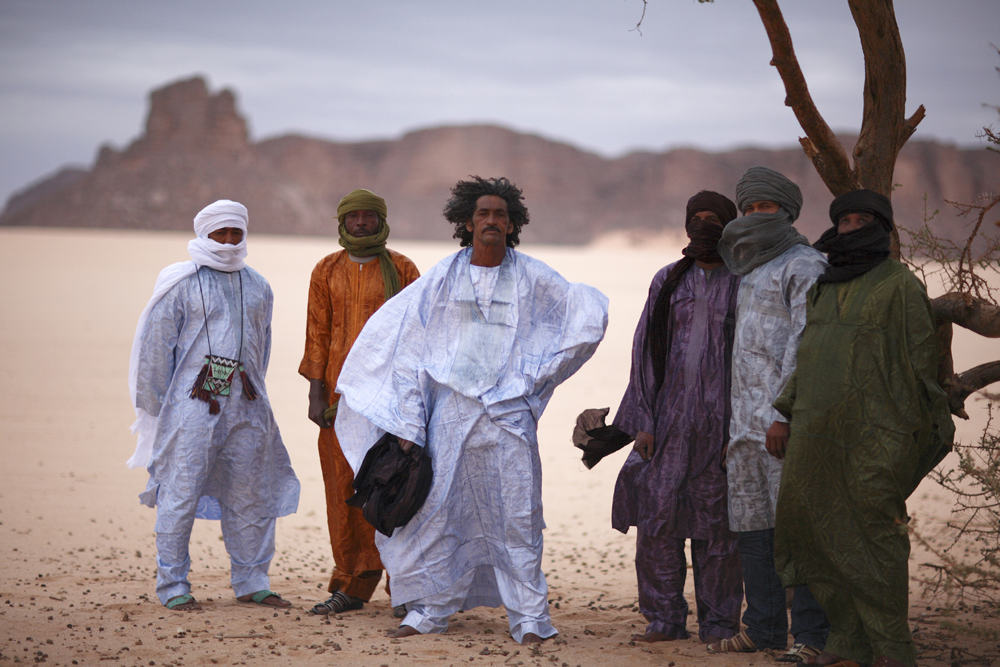
The desert is a place of hardship and subtle beauty, a stark world that reveals its secrets slowly and carefully. Life in the desert is resilient and strong, and the people are gentle giants among the sand, storms, and sun. For Saharan blues band Tinariwen, the desert is their home, and their hypnotic and electrifying guitar rock reflects complex realities of their homebase in North West Africa.
They are Tuareg, descended from nomadic people who have wandered the dunes for millennia, but the music of Tinariwen travels too, reverberating far from dusty plains of Mali. Their 2011 album Tassili, recorded in the Algerian desert — in a tent and under the stars with a esteemed cadre of musicians including Nels Cline and TV on the Radio’s Tunde Adebimpe and Kyp Malone — won a Grammy Award for Best World music. Now their new record Emmaar returns to their roots, delivering stripped-down dirges, effervescent anthems, and above all, a return to simplicity and honesty.
Due to political instability in their country, the band recorded away from their homeland for the first time, setting up shop in another desert: Joshua Tree, California. “This is the first time we are recording out of Africa it has to be in a desert,” says bassist Eyadou Ag Leche. “We would like to live in peace in the North of Mali, but this is very difficult, there is no administration, no banks, no food, no gas. Joshua Tree is in the high desert of California, we love all the desert, these are places where we feel good to live and to create.”
Recorded over three weeks in studio built in a house in the region known for spaced-out rock ‘n’ roll and psychedelic cowboy folk, Emmaar showcases an organic feel from the rolling hand drums and meandering guitars of album opener “Toumast Tincha” chants to the galloping beats of the forward-marching “Chaghaybou.” “We were not in a proper studio or outside in the desert like Tassili,” Ag Leche says, “we built a studio in a big house in Joshua Tree. Everybody in the same room, with no separation. We wanted something which sounded natural and live.”
Along with the original members who founded the group in the 1980s (vocalists and guitarists Ibrahim Ag Alhabib, Abdallah Ag Alhousseyni, and Alhassane Ag Touhami) and the younger generation who grew up listening to the band and joined in the 1990s (multi-instrumentalist Eyadou Ag Leche, guitarist Elaga Ag Hamid, and percussionist Said Ag Ayad), a group of American musicians appear on the album. Accompanied by Red Hot Chili Peppers guitarist Josh Klinghoffer, Matt Sweeney from Chavez, Nashville fiddler Fats Kaplin, and poet Saul Williams, Emmar is a richly layered listen solidified by atmospheric textures and gritty guitar-work.
Recording away from Mali created a nuanced sound that Ag Leche says could have been inspired by the new landscape and American experiences. “We think that the air is different, the moods are different, recording in America and doing a small tour in California, Arizona, New Mexico and Texas, brought us in a special mood, the landscape, the big space, the South. We watched Western movies, during the recording and ate burritos, and the engineer who worked with us is from Nashville, so I supposed it change the way our music is captured.”
But while the location was new, their music still focused on life in the Sahara. “The new songs of this album talk about what we feel today,” Ag Leche says, “the Tuareg issues, the need of being recognized by the administration of our country. But also some poetic ways of describing our feelings. The Tamasheq language is using a lot of metaphors, and it comes from the old traditional tuareg poetry that tells about the Tuareg tribes, their adventures in the desert, the wars, but also the beauty of the desert, the sky, the lands, and the Assouf, our blues, and nostalgia of an old time.”
If Tinariwen pays homage to old times, it’s because their present is in flux. Turmoil has embroiled their region once again, as governments and powers rise and fall, almost with the regularity of the seasons. “It is going to be a very long way to peace in the north,” says Ag Leche. “It’s been up and down. The Islamist are all around in the North but also some thieves and bad people taking advantage of this chaos to frighten our people.”
Mali, it seems, is the forgotten, or ignored, brother of the Arab Spring, but on Emmaar, Tinariwen tells about the trials of their people and tells the world of the plight of their families. “The ideals of the people have been sold cheap, my friends / A peace imposed by force is bound to fail / And gives way to hatred,” Ag Leche sings on “Toumast Tincha.”
Though the band’s success has brought them around the world, they rarely can go home, facing threats of incarceration and death by thugs in power. But like creatures of the desert, they adapt and carry on, after all, Tinariwen is a band born into chaos.
“Our people are used to moving all the time,” Ag Leche says, “since the late 60’s we have always been moved between Mali, Algeria, Libya, Chad, Mauritania, Niger. Nowaday a lot of our families moved to the Algerian border or close to Niger because of the situation with the Malian administration. We are refugees in a lot of countries in Africa.”
Tinariwen’s own story burgeons with myth and mythos in their home country and beyond. Their tale is the stuff of legends. Founding member Ibrahim Ag Alhabib, grew up in desolation in Mali, where he witnessed his own father’s death at the age of four. Later, after seeing a western film, he built his first guitar from a bicycle wire, a stick and a tin can. The band was founded in the 1980’s in Tureg camps in Libya, where the nomadic peoples had relocated to find work and a new life away from their homeland of the Sahara. Disillusioned by the promises of Quaddafi at the time, the Tuareg became restless again and longed for home. But the interaction with city life yielded unexpected consequences, the became exposed to Western music — most notably the guitar-driven anthems of Jimi Hendrix and the American Blues — which they mixed with their own soulful dirges which they’d perform in the camps by the fire with battery-operated amps. When revolution broke out back in Mali, they left Libya behind, hung up their guitars and picked up guns to fight for the Tuareg independence. When the dischord died down, the band returned to music, delivering songs imbued with aching beauty and lonesome poetry. Their music was bootlegged and traded around the region, earning them a devout following. Then in the late 1990s, they were discovered by Western musicians and for the first time, their songs left the Sahara and were introduced to the world. For the next ten years, the nomads now traveled the world, performing at nearly every notable festivals and venues around the globe, providing the world with a taste of the aching beauty and lonesome pleasures of Saharan Assouf.
Tinariwen official site
Tinariwen on Facebook
Tinariwen on Twitter
Tinariwen on YouTube
photo credit: Marie Planeille
Lonnie Holley @ Brooklyn Masonic Temple

Lonnie Holley was born on February 10, 1950 in Birmingham, Alabama. From the age of five, Holley worked various jobs: picking up trash at a drive-in movie theatre, washing dishes, and cooking. He lived in a whiskey house, on the state fairgrounds, and in several foster homes. His early life was chaotic and Holley was never afforded the pleasure of a real childhood.
Since 1979, Holley has devoted his life to the practice of improvisational creativity. His art and music, born out of struggle, hardship, but perhaps more importantly, out of furious curiosity and biological necessity, has manifested itself in drawing, painting, sculpture, photography, performance, and sound. Holley’s sculptures are constructed from found materials in the oldest tradition of African American sculpture. Objects, already imbued with cultural and artistic metaphor, are combined into narrative sculptures that commemorate places, people, and events.
Holley did not start making and performing music in a studio nor does his creative process mirror that of the typical musician. His music and lyrics are improvised on the spot and morph and evolve with every event, concert, and recording. In Holley’s original art environment, he would construct and deconstruct his visual works, repurposing their elements for new pieces. This often led to the transfer of individual narratives into the new work creating a cumulative composite image that has depth and purpose beyond its original singular meaning. The layers of sound in Holley’s music, likewise, are the result of decades of evolving experimentation.
In the early 2000s, Holley’s music caught the attention of Matt Arnett, the son of art collector Bill Arnett, who has been collecting Holley’s art since the 1980s. In 2010, Matt set up an impromptu performance by Holley at his home for Dust-to-Digital founder, Lance Ledbetter. Deeply moved by Holley’s keyboard playing and singing, Ledbetter insisted on getting Holley into a recording studio as soon as possible. The result was the album Just Before Music, which features Holley’s first studio recordings made in 2010 and 2011. More recordings are continuing to be made to celebrate and to document one of America’s most compelling musicians.